Colaps at Mensch und Computer 2026

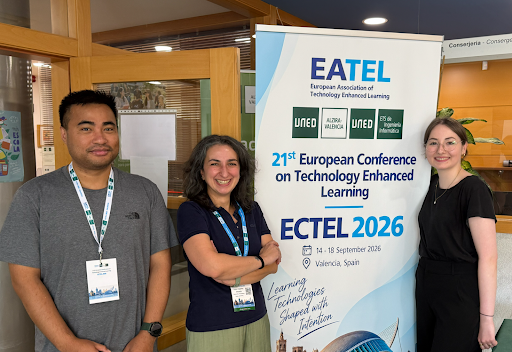
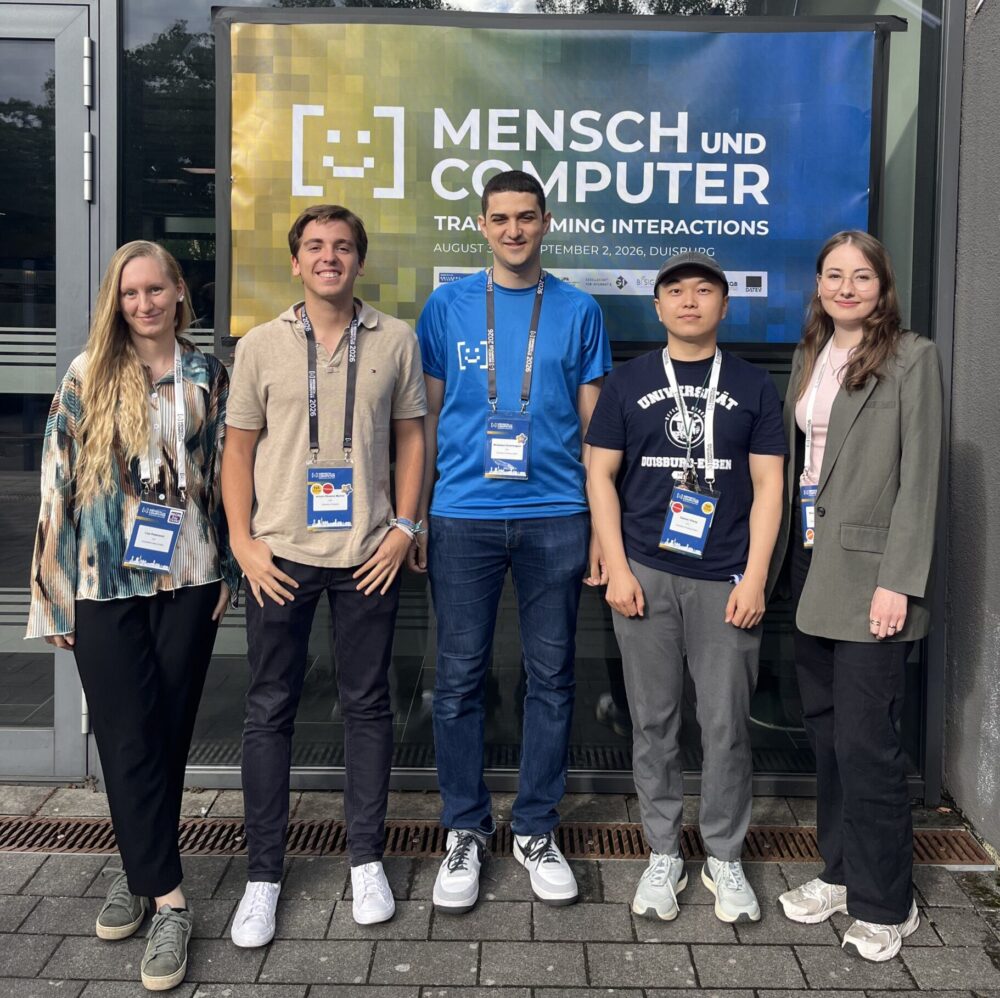
We recently wrapped up an exciting and inspiring experience at Mensch und Computer 2026, where we had the opportunity to share our research, exchange ideas, and connect with researchers and practitioners from the Human–Computer Interaction community. Our contributions are the following: Arturo and Lisa presented their work, “Monitoring and Understanding Notebook-Based Learning with Jupyter” as part of the Student Research Competition. While coding, students often get stuck in repetitive trial-and-error debugging, with […]

Read more

colaps at the Festival of Learning 2026

We had a great time at the Festival of Learning / AIED 2026 in Seoul, South Korea presenting our work, meeting old and new friends and colleagues 🙂 You can see a short video about our adventures here: https://youtu.be/7geVdmw_5J8?si=Aj-NSel8Mtn6-mLM This year, the group had 4 main contributions: Kai presented our paper “Beyond one-size-fits-all: personalizing computational proxies of the zone of proximal development through help-seeking behaviors“.This paper proposes a computational representation […]

Read more

AI Literacy & Learner Modeling at colaps

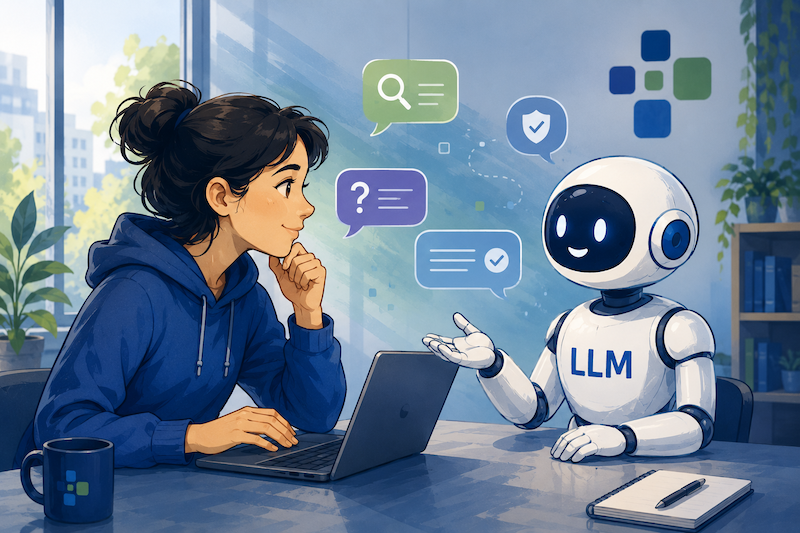
AI-generated image that depicts a dialogue between a human and an LLM

We are excited to open a new PhD position at colaps at the University of Duisburg-Essen (UDE) at the intersection of learner modeling, psychology, philosophy and generative AI. What’s the project about? The position is part of MORAL-ALIGN, a DFG-funded project in the context of the DFG Priority Programme 2573 “Rethinking Disinformation” (Re:DIS) exploring how generative AI systems can gradually shift their moral framing to match a user and how […]

Read more

Congratulations, Cleo Schulten! 🎉

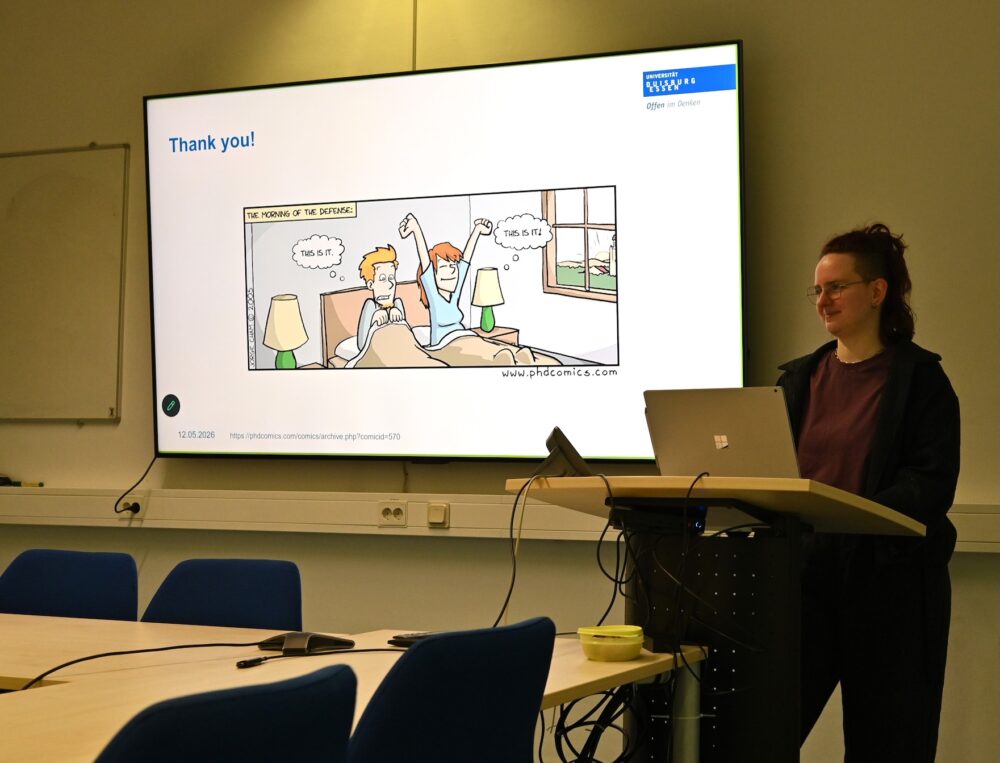
We are delighted to share that Cleo M. Schulten has successfully defended her PhD dissertation, “Learning in Hackathons: Proposing a methodological framework for the design, implementation and evaluation of interest-driven, community-based events”, at the Faculty of Computer Science, Universität Duisburg-Essen. The dissertation was awarded magna cum laude, a testament to the quality and rigor of four years of dedicated research. Cleo joined the COLAPS research group in 2021, and from the […]

Read more

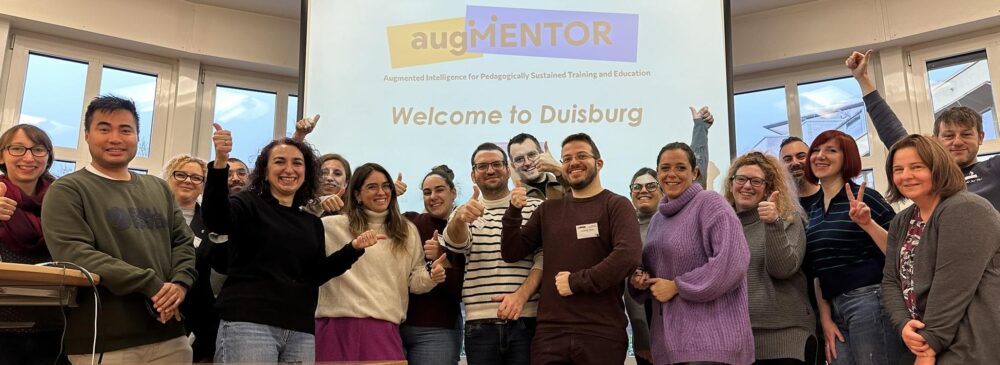
AugMENTOR: Augmented Intelligence for Pedagogically Sustained Training and Education

In December 2025, we at the Colaps Group at the University of Duisburg-Essen (UDE) successfully concluded the European H2020 AugMENTOR project (https://augmentor-project.eu) AugMENTOR’s project was led by an international consortium of thirteen (13) European Institutions. The Colaps augMENTOR team consisted of Prof. Dr. Irene-angelica Chounta, Bibeg Limbu, and Lisa van der Heyden.  AugMENTOR adopts an augmented intelligence approach to develop personalised and collaborative learning paths that promote both foundational and […]

Read more

A Year of Connection and Reflection: The colaps Retreat in Saarbrücken

colaps group

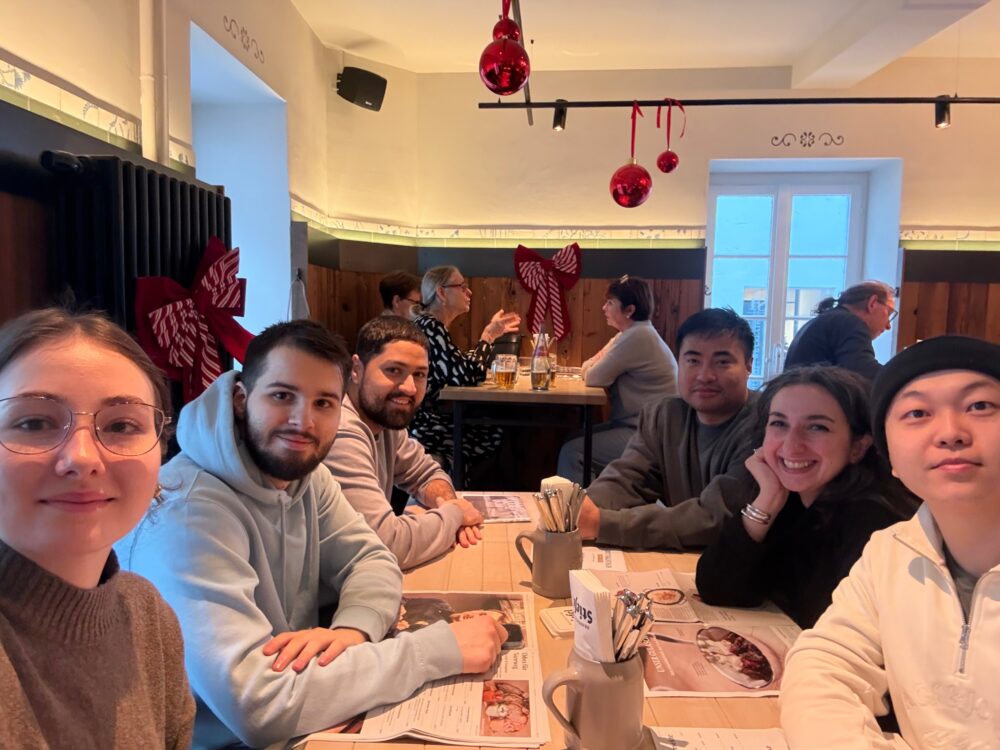
As another year goes by, our research group gathered for a memorable retreat in Saarbrücken—a two-days trip that offered academic exchange and moments of genuine connection. The highlight of our visit was the time spent with colleagues at Saarland University, Tomo Nagashima (LaLa Lab) and Armin Weinberger (EduTech) and members of their groups, sharing our ongoing research projects and gaining perspectives on the work unfolding across our extended research community. […]

Read more

Lecture on “The Effects of Yoga on Sports Performance and Health”

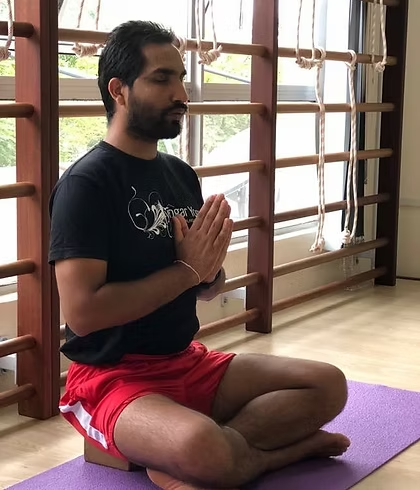
The Effects of Yoga on Sports Performance and Health Lecture by Dr. Tilak Raj (https://www.tiyayoga.org/)   Yoga is much more than stretching or relaxation—it’s a complete system that reshapes how we move, think, and recover. Over the past decade, research has started to catch up with what practitioners have long known: yoga improves both the body’s mechanics and the mind’s resilience. In this talk, Dr Tilak Raj (PhD, Lincoln University; Level 4 […]

Read more

Lecture on “Measuring Educational Innovation”

Lecturer: Erna Engelbrecht  Evaluating educational innovations is essential for determining their impact and potential for broader implementation. However, current course evaluation practices in higher education tend to emphasize student satisfaction and grades, often reducing evaluations to diagnostic tools. These approaches frequently overlook the perspectives of diverse stakeholders and lack a scholarly foundation due to their reliance on standardized metrics. Consequently, opportunities for individualized professional development among educators and impactful improvement […]

Read more

Call for Teaching Assistants

AI-generated image of a classroom with students

Call for Teaching Assistants Course: Introduction to Programming (Grundlegende Programmiertechniken), IP101 We are seeking enthusiastic and dedicated Teaching Assistants (TAs) for our upcoming Introduction to Programming course for the MIPSY bachelor program, scheduled for WiSe 2025/26. This course introduces students to fundamental programming concepts, problem-solving techniques, and basic software development skills, using Python. Responsibilities: Assist in delivering lab sessions and tutorials Provide guidance to students during coding exercises Help develop instructional materials and […]

Read more

[Invited talk] Dr. Rwitajit Majumdar: “Context, Data and Inferencing: When Human-AI Meet to Learn”

On Wednesday June 18th at 10:30, we are happy to host Prof. Dr. Rwitajit Majumdar for an invited talk with the title: “Context, Data and Inferencing: When Human-AI Meet to Learn”. Dr. Rwitajit Majumdar is an Associate Professor at Kumamoto University, Japan, affiliated with the Research and Educational Institute for Semiconductors and Informatics, as well as the Graduate School of Social and Cultural Sciences, Division of Instructional System Studies and […]

Read more